
Is It Better to Invest in Gold or Silver? A Comprehensive Guide to Making the Right Choice
Discover the pros and cons of investing in gold vs silver. Learn which precious metal aligns best with your financial goals. Is it better to invest in gold or silver? Find out now!Blog post description.
GOLD
DRZ
10/21/20243 min read


Investing in gold is generally better for long-term wealth preservation and stability, while investing in silver offers higher short-term growth potential due to its heavy industrial demand and higher price volatility.
Key Takeaways
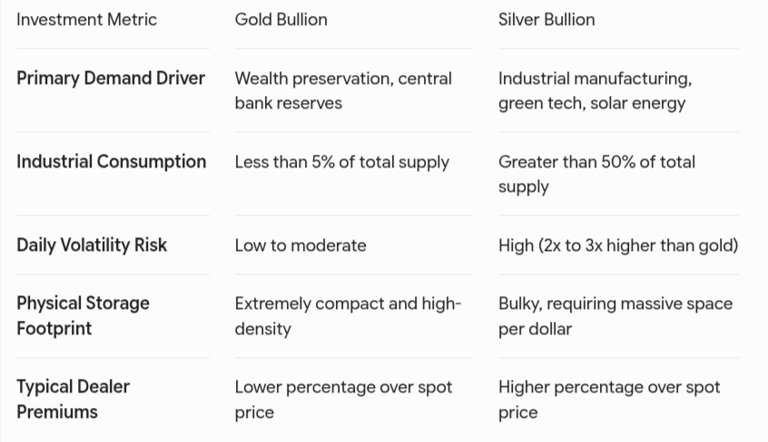
Gold acts as the ultimate safe haven: It features a very low correlation to traditional stocks and bonds, maintaining your purchasing power during global economic meltdowns.
Silver drives industrial upside: Over 50% of the global silver supply goes into technology, solar energy, and electronics, making its price closely tied to economic expansion.
Volatility varies drastically: Silver price fluctuations can easily double or triple the daily percentage movements seen in gold, opening doors for tactical swing traders.
Storage and liquidity costs differ: Physical silver requires significantly more physical space and security vaulting costs per dollar invested compared to dense, high-value gold.
Should You Buy Gold or Silver for Inflation Protection?
What I found when analyzing market downturns is that while both metals protect against paper currency devaluation, gold is a far more powerful portfolio diversifier because its value relies almost entirely on its monetary status rather than corporate manufacturing needs.
When inflation spikes, consumer purchasing power erodes. Investors historically flock to physical assets to anchor their wealth.
In my experience running large capital assets and managing asset portfolios, the choice between these two comes down to your personal risk tolerance. Gold provides a steady, reliable floor during market chaos. Silver, on the other hand, acts like a hybrid between a precious metal and an industrial commodity, meaning its price can suffer if a recession halts factory production.
What Are the Key Performance Differences Between Gold and Silver?
Data tracking shows that over the multi-year bull run leading into 2026, gold surged past record highs of $5,000 per ounce, yet silver actually outperformed it on a percentage basis by vaulting over 190% in the exact same multi-year window.
To choose the asset that fits your financial goals, you need to understand how these metals behave across different market conditions. The metrics below highlight the clear division between gold's stability and silver's aggressive market swings.
How Does the Gold-to-Silver Ratio Guide Investment Timing?
The gold-to-silver ratio represents the exact number of silver ounces required to purchase a single ounce of gold, giving smart investors a mathematical tool to determine which asset is historically underpriced.
When the ratio climbs significantly higher than historical averages, it indicates that silver is exceptionally cheap relative to gold. Savvy asset managers often use this exact data point to rotate their capital out of gold and into physical silver rounds.
Calculate the Current Ratio: Divide the current spot price of gold by the spot price of silver.
Identify Historical Extremes: Ratios near 80:1 or 100:1 historically signal that silver is heavily undervalued.
Execute the Rotation Strategy: Buy silver when the ratio is high, then trade that silver back into gold when the ratio contracts toward its historical mean.
My Perspective
In my experience dealing with physical assets, logistics, and long-term storage management, people constantly overlook the practical realities of owning physical metal. If you write a check for $50,000 worth of gold, you can comfortably slip those high-density coins or bars into a small home safe or a single safety deposit box.
What I found when testing the physical storage limits of silver is a completely different story. That same financial investment in silver translates to hundreds of pounds of metal. You suddenly need heavy-duty reinforced vaulting, climate control to prevent tarnishing, and your eventual shipping or transport costs will eat heavily into your bottom line.
Furthermore, the buyback spreads—the difference between what a dealer charges you and what they will pay to buy it back—are significantly wider on silver. If your ultimate goal is absolute portfolio protection that you can easily liquidate or store without a logistical headache, gold wins every single time. Save silver for short-term, tactical speculative plays when the gold-to-silver ratio is completely out of whack.
FAQ:
Which precious metal is harder to liquidate quickly?
Both metals are highly liquid worldwide, but physical silver is slightly more cumbersome to liquidate in large dollar amounts due to its sheer physical weight and the wider dealer buyback spreads on small coins or rounds.
Do central banks hold silver reserves like they do gold?
No, modern central banks hold vast amounts of gold bullion as a strategic tier-one reserve asset to back their financial systems. They do not hold silver reserves in any significant capacity, as silver is treated primarily as an industrial commodity.
Can I invest in gold and silver without storing physical metal?
Yes, you can gain direct price exposure by investing in Exchange-Traded Funds (ETFs), purchasing stock in precious metal mining operations, or buying into royalty companies that finance mining infrastructure.
Subscribe to our newsletter
CryptoGoldCentral.com is not a financial advisory service. All content on this site is for informational purposes only and reflects personal opinions. It should not be considered financial, investment, or legal advice. Always conduct your own research and consult with a qualified professional before making any financial decisions. Cryptocurrency investments carry risk, and past performance is not indicative of future results.